What are Dental Implants?
Dental implants are tooth root shaped titanium devices, which are placed into the bone once occupied by a tooth.
Once positioned, under sterile conditions at the practice, bone fuses to the implant surface in a process known as osseointegration. The procedure is carried out under local anaesthetic and although some soreness afterwards can be expected this is usually minimal.
Once integrated a healthy implant can virtually be considered as permanent. At this stage, which can be anything from six weeks to four months after the implant is placed, it is uncovered and a special post called an abutment is attached. A porcelain crown or bridge can then be made for the post and subsequently cemented into position. In some situations a post and provisional crown can be attached to the implant at the time of the surgery.
The main advantages of dental implants are that if kept healthy they are permanent and the adjacent teeth are not touched in any way. Dental implant treatment is extremely predictable with success rates in excess of 95% and is now seen as the ideal solution and first choice for replacing missing teeth.
I exclusively use the Nobel Biocare dental implant system. This is one of the most researched and premium dental implant systems worldwide.

The 3 phases for dental implant treatment are as follows: –
Phase I – Diagnosis and treatment planning
Our first task at the consultation is to try to understand the nature of your problem and to decide if this can be managed with implants. We consider the possible alternatives, your medical and oral health, and begin to form an outline proposal for treatment. We can be clear about potential costs at this stage – no nasty surprises down the line.
If you decide that implants are for you we may carry out further diagnostic procedures at this stage – models, further x-rays, CT scans and photographs can be taken of your mouth to assist with our diagnosis and second stage consultation, and it also allows the technician to get involved in your case, and to make a surgical guide template if one is needed. The template shows us the ideal positions of the proposed dental implants during surgery, but may not be necessary for simple placements.
Our laboratory can also make wax mockups of the ideal teeth shape for the final crowns, which can be used at the consultation for diagnosis of your appearance and to make provisional restorations.
Phase II – Implant Surgery
The dental implants are placed very carefully into the appropriate positions as planned. The procedure is carried out under local anaesthetic under strict sterile conditions.
Healing is rapid and any swelling, discomfort or pain is usually minimal and easily managed with over-the-counter painkillers. You will be provided with everything you need at the implant surgery appointment.
Phase III – Implant Restoration
Depending on how the implant has been left, buried in the gum or protruding through, the next stage involves exposing the implant and fitting a special attachment, which enables us to take accurate impressions of the implant position. This may involve exposing the implant with a second minor surgical procedure, with impressions being taken after a further short period for the gum to heal, usually 2-3 weeks.
We then have the restoration made and posts (abutments) connected. We can fit transitional, temporary crowns or healing abutments at this visit, which help the gum ‘heal’ into the ideal position.
The definitive porcelain crowns are cemented (or screwed) into place, after a try-in to check the colour, shape and fit.
Single Implant

Single-tooth implants can be used in people who are missing one or more teeth.
An implant is surgically placed in an opening that your dentist makes in the jawbone. After the implant attaches to your bone, it acts as a new “root” for the crown that will replace your missing tooth. A crown, which is made to look like a natural tooth, is attached to the implant and fills the space left in the mouth by the missing tooth.
Implants function in the same way as natural teeth. This means you can eat any type of food you like – with confidence and without pain – including foods that are hard, like apples, or difficult to chew, like crusty bread or steak. Implants also improve your ‘bite’ (i.e. the action of the jaws opening and closing), meaning your new teeth can bite and chew food just like normal teeth.
Implants are permanently fixed in place, so you don’t have to remove them for cleaning, take them out at night or worry about them moving, becoming loose or falling out. So, with one or two additional cleaning methods, which you will be shown you can clean your new implant-supported teeth as easily as natural teeth.
Multiple Implants
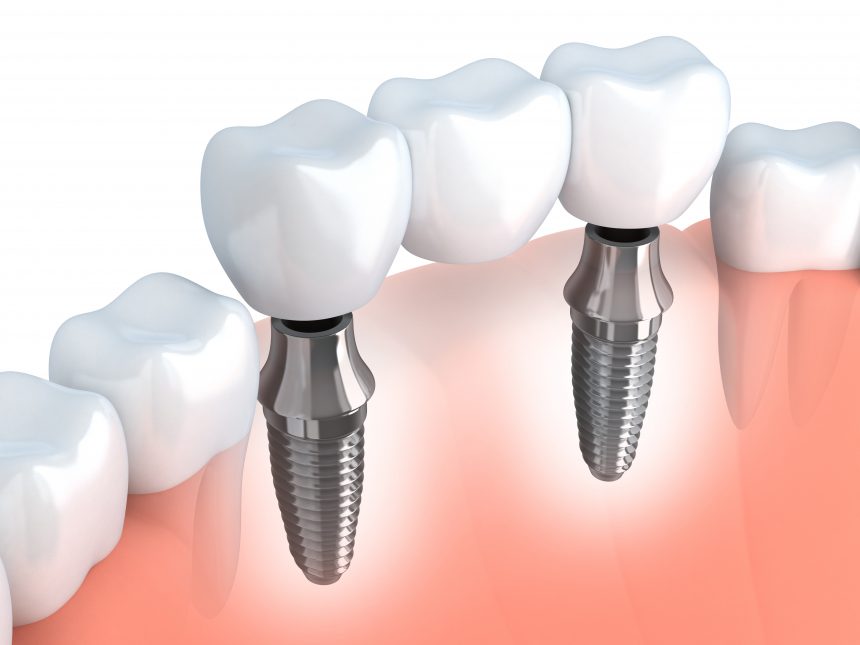
Multiple missing teeth can be replaced with multiple implants supporting fixed bridgework.
For example, a three-unit bridge to replace three teeth in a row will comprise of two implants and three crowns; or multiple implants can support an even greater number of false teeth. Usually four to eight implants are needed to replace a full arch (jaw) of teeth (10 or more crowns) using fixed bridgework.
 daveshdentistry